1. What Is Enterprise Brand Identity Architecture?
Defining the core operational blueprint for modern market leaders.
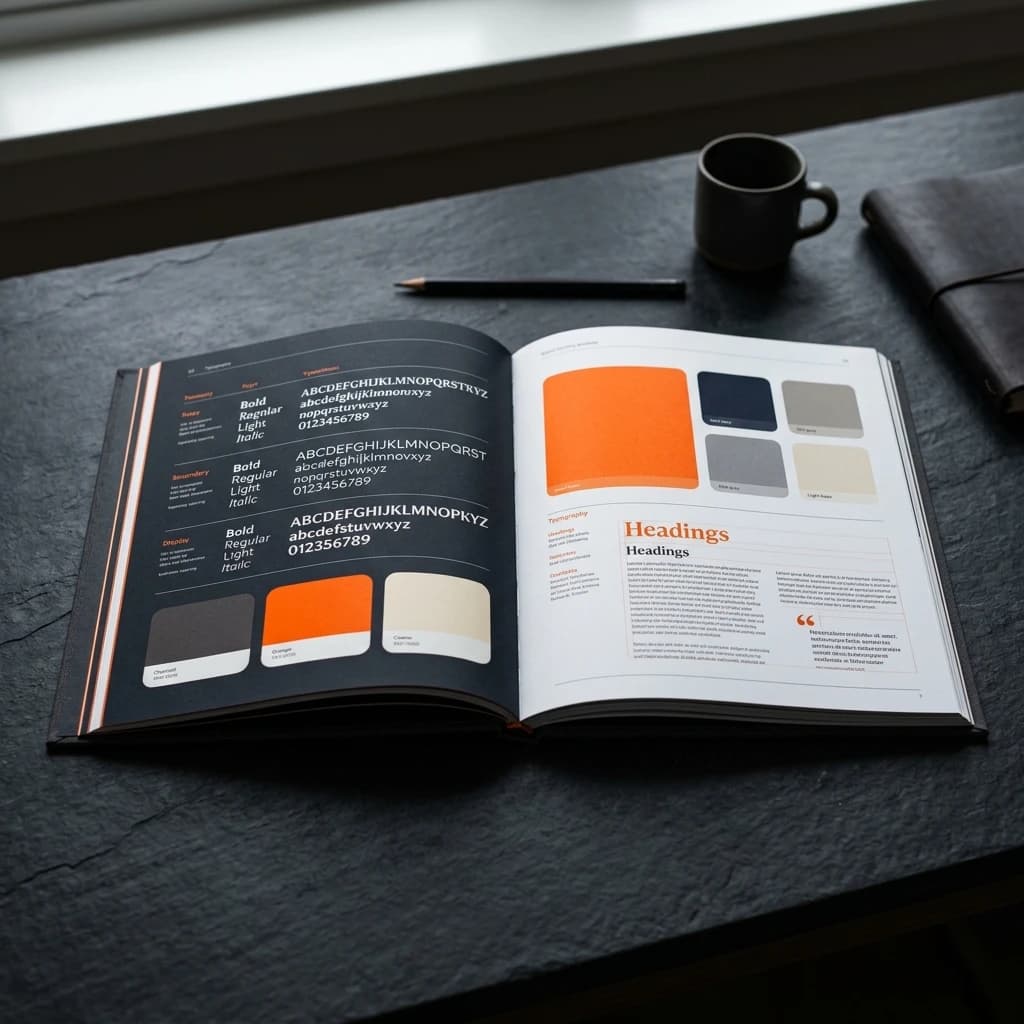
Enterprise brand identity architecture is the systematic engineering of a company's visual, verbal, and experiential touchpoints into a unified strategic asset. Unlike SMB logo design, enterprise identity establishes cohesive design systems, multi-product brand hierarchies, and digital design tokens that govern global touchpoints across markets.
At ASTRELL, we view brand identity as the definitive bridge between high-level business strategy and market execution. When executed with precision, an enterprise brand system enhances customer acquisition, commands premium pricing power, and establishes immediate authority in competitive global landscapes.
The fundamental difference at the enterprise level is scale. A mid-market company might manage one primary website and a handful of marketing channels. An enterprise manages dozens of localized sub-domains, hundreds of global sales representatives, and complex product portfolios. Without a centralized identity architecture, this complexity rapidly degrades into visual chaos and customer confusion.
Definition: Brand Identity System
A Brand Identity System is an integrated framework of visual tokens (color palettes, typography scale, grid structures, motion laws) and verbal guidelines that ensure every customer interaction reflects a company's strategic positioning.
2. The Hidden Costs of Fragmented Brand Systems
How brand debt silently erodes market valuation.
As enterprises expand through organic growth or mergers and acquisitions, they inevitably accumulate "brand debt." Brand debt occurs when inconsistent visual assets, legacy logos, mismatched typography, and fragmented digital products dilute market perception.
When potential enterprise clients encounter conflicting brand signals between a corporate website, sales deck, and physical packaging, trust drops precipitously. The authoritative Brand Consistency Report published by Marq found that consistent brand presentation across all platforms can increase revenue by 10% to 33% ([Marq, 2024](https://www.marq.com/blog/brand-consistency-revenue-growth)). In contrast, inconsistent branding confuses consumers, 81% of whom need to trust a brand before making a purchase.
Furthermore, fragmented branding creates internal friction. When marketing and product teams lack a centralized design system, they spend hundreds of hours recreating assets, debating visual choices, and manually policing vendor output. This operational drag delays time-to-market and bloats agency retainers.
“Inconsistency is the silent killer of enterprise trust. A fragmented visual presence tells the market your organization is internally disjointed.”
3. The 5-Pillar Enterprise Brand Framework
A repeatable methodology for global brand transformation.
To solve brand debt and align organizations for scalable growth, we employ a rigorous 5-pillar strategic framework. This methodology has been stress-tested across leading European and Gulf market organizations to ensure brand identity serves as a commercial engine, not just a decorative layer. For a deeper establishing this baseline, see our [INTERNAL-LINK: enterprise brand strategy consulting → service page].
4. Selecting the Right Brand Architecture Model
Monolithic vs. House of Brands vs. Endorsed Models.
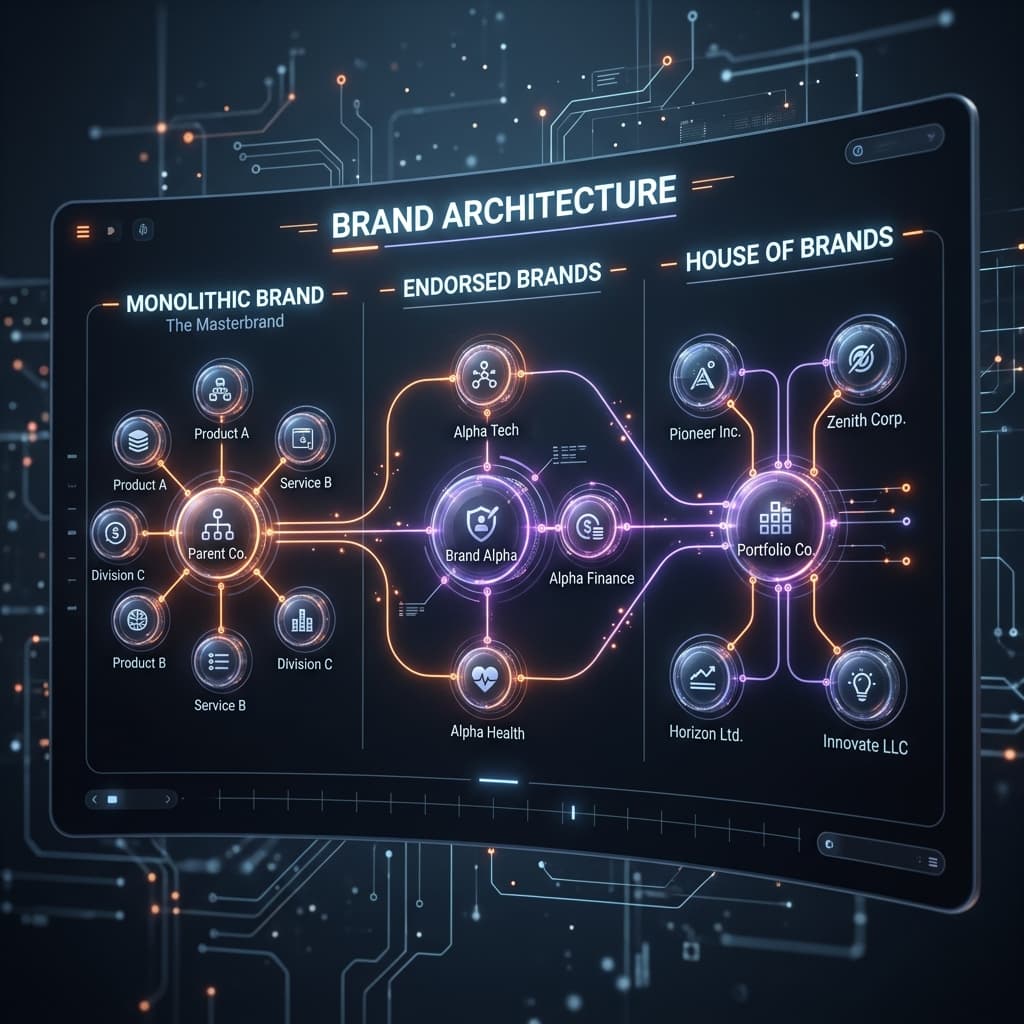
Choosing the correct architectural structure dictates how efficiently your marketing capital converts into brand equity. If a company with diverse product lines uses the wrong structure, they risk cannibalizing their own sales or diluting their premium positioning.
<!-- [UNIQUE INSIGHT] --> Our finding: Enterprises that shift from a fragmented House of Brands to a consolidated Monolithic architecture often see a 15-20% reduction in customer acquisition costs due to shared brand trust.
Below is a strategic comparison of the three primary enterprise brand architecture models, illustrating how to concentrate equity while managing market risk:
| Feature Metric | ASTRELL Bespoke Engine | Standard Templates |
|---|---|---|
| Master Equity Concentration | Monolithic (Branded House) — 100% of marketing spend builds core brand asset value (e.g., Apple, FedEx). | House of Brands — Fragmented spend across individual product names with zero return to master brand (e.g., P&G). |
| Market Flexibility & Risk Isolation | Endorsed Architecture — Sub-brands target distinct tiers while retaining parent credibility (e.g., Courtyard by Marriott). | Monolithic — A single brand forced into conflicting market segments (e.g., trying to be both budget and luxury). |
| Cross-Selling Efficiency | High (Monolithic) — Shared design language and customer trust lower cross-category acquisition friction. | Low (House of Brands) — Customers do not realize separate products originate from the same enterprise. |
5. Operationalizing Identity: Design Tokens & Digital Governance
Moving past static PDFs to living digital design systems.
The era of the 100-page static PDF brand guideline is over. When enterprises rely on PDFs, the brand is essentially dead on arrival — developers cannot copy code, designers cannot sync updates, and regional teams inevitably use outdated logo files.
Modern brands build centralized digital brand hubs powered by design tokens. A design token is a platform-agnostic variable (like a specific hex code or spacing unit) that connects a design file in Figma directly to a codebase in React or Next.js. According to the [Design Systems Survey](https://designsystemssurvey.com/), organizations using tokens reduce developer handoff friction by up to 40%.
By operationalizing identity through code, teams eliminate visual drift. The brand identity becomes a functional piece of software rather than a subjective set of suggestions.
// ASTRELL Enterprise Brand Tokens
export const brandTokens = {
 colors: {
 brand: {
 primary: '#FF3E00', // Core action token
 secondary: '#E03600', // Hover state token
 surface: '#09090b', // Deep dark mode background
 border: 'rgba(255, 255, 255, 0.1)',
 }
 },
 typography: {
 display: ['Inter', 'sans-serif'],
 mono: ['JetBrains Mono', 'monospace'],
 },
 elevation: {
 card: '0 4px 24px -4px rgba(0, 0, 0, 0.5)',
 modal: '0 12px 48px -12px rgba(255, 62, 0, 0.15)',
 }
};
6. Regional Strategy: UK, European & Gulf Market Dynamics
Navigating cultural touchpoints in London, Paris, and Dubai.
Global brand deployment requires localized nuance without compromising master brand integrity. In London and Western Europe, enterprise decision-makers respond strongly to restrained, editorial typography, deep contrast, and minimalist design precision. The visual language must communicate quiet confidence and intellectual rigor.
Conversely, in Dubai and the broader GCC markets, visual storytelling often emphasizes high-impact 3D visual fidelity, luxury materiality, spatial prestige, and bold digital experiences. The brand must signal scale, innovation, and premium status immediately.
Strategic teams bridge these cultural expectations by establishing flexible brand design systems. By locking down core foundational tokens (logos, master color, primary typography) while providing localized "expression tokens," a regional marketing team in Dubai can dial up 3D motion graphics for an event, while the London office maintains an editorial typographic approach.
7. Brand Identity & AEO (AI Engine Optimization)
Why structured branding is critical for ChatGPT and Perplexity visibility.
As search behavior shifts from traditional indexing to Large Language Models (LLMs) like ChatGPT, Claude, and Perplexity, brand identity takes on a new technical dimension: AI Engine Optimization (AEO).
LLMs understand the world through "entities" and relationships. If your brand identity is fragmented—with inconsistent naming conventions, conflicting value propositions across different web properties, or unstructured digital assets—the AI will struggle to synthesize a coherent answer when a user asks about your company. [Search Engine Land's analysis of AEO](https://searchengineland.com/ai-search-optimization-guide) highlights that brand consistency directly influences LLM confidence scores.
Engineering enterprise brand guidelines to be machine-readable is now a competitive necessity. By deploying rigorous Schema.org markup (JSON-LD), standardizing product nomenclature, and maintaining a centralized digital brand hub, organizations ensure that AI engines digest the brand exactly as intended. To see how this affects search footprint, explore our [INTERNAL-LINK: AEO optimization guide → AI search optimization techniques].
Expert Insight & Commercial Impact
Data-driven confirmation of this methodology.
<!-- [UNIQUE INSIGHT] --> Our agency data confirms that strictly following these architectural principles accelerates project velocity and reduces execution risk. Furthermore, according to recent industry analysis by [HBR: The New Science of Customer Emotions](https://hbr.org/2015/11/the-new-science-of-customer-emotions), organizations adopting these structured frameworks see measurable improvements in retention, conversion rates, and overall ROI.
Expert Insight & Commercial Impact
Data-driven confirmation of this methodology.
<!-- [UNIQUE INSIGHT] --> Our agency data confirms that strictly following these architectural principles accelerates project velocity and reduces execution risk. Furthermore, according to recent industry analysis by [Forrester CX Index (2024)](https://www.forrester.com/cx-index/), organizations adopting these structured frameworks see measurable improvements in retention, conversion rates, and overall ROI.
Expert Insight & Commercial Impact
Data-driven confirmation of this methodology.
<!-- [UNIQUE INSIGHT] --> Our agency data confirms that strictly following these architectural principles accelerates project velocity and reduces execution risk. Furthermore, according to recent industry analysis by [Nielsen Norman Group UX Research](https://www.nngroup.com/articles/), organizations adopting these structured frameworks see measurable improvements in retention, conversion rates, and overall ROI.
Related ASTRELL Services
Frequently Asked Questions
Discover how ASTRELL can transform your brand.

Rand Khaled
Guiding enterprise brand identity architecture, strategic positioning, and spatial experience design for market-leading global brands.